


It surprises many people, but the Netherlands invests more money in the Thai economy than any other EU country. Not as a tourist or retiree, but as a serious investor. Globally, our country even ranks in the top five. Exactly how significant is this role, and what does that mean if you want to do business with Thailand yourself?


Central Pattana is investing 3,8 billion baht in a new multifunctional project in Khon Kaen. The publicly traded company is building a second Central shopping center, a budget hotel, and a high-rise apartment complex there, aimed at students, young professionals, and the growing urban middle class.

Thai consumers lose confidence in the government due to the economy and cost of living.
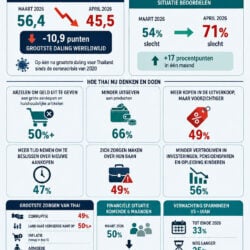
Consumer confidence in Thailand fell to 45,5 points in April. According to Ipsos, this is the sharpest monthly decline worldwide. Economic uncertainty, higher costs, geopolitical tensions, and disappointment with government policy are weighing heavily on sentiment.

The world-famous Thai jasmine rice is under pressure due to the crisis in the rice fields.

Thai jasmine rice has been considered the flavour enhancer of the global market for decades. Yet, in 2025 and 2026, farmers in northeastern Thailand are up against the wall. Low prices, lower yields, and fierce competition from Vietnam, India, and Cambodia are putting the success story of Khao Hom Mali to the test.


Chinese supermarkets are growing rapidly in Thailand, from small shops in Chinese neighborhoods to prominent players in shopping malls and tourist cities. Low prices, popular snacks, and viral trends on social media are attracting more and more young Thai customers.

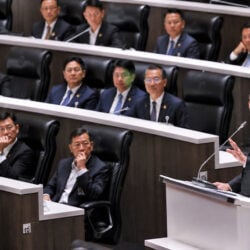
Many Thais are worried about the Anutin government's plan to borrow 400 billion baht. A nationwide survey by Suan Dusit Poll shows that the high cost of living, energy bills, expensive groceries, and household debt are putting particular pressure on confidence in the economy.
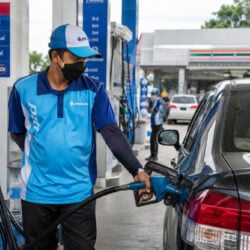
Thailand could face inflation of 4 to 5 percent in the coming months. According to Finance Minister Ekniti Nitithanprapas, this is primarily due to expensive energy and dependence on imported oil and gas. The government is therefore advocating an emergency loan of 400 billion baht.
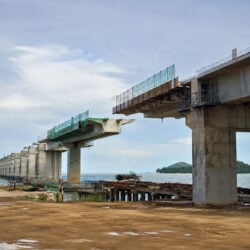
In recent years, Thailand launched major plans for ports, railway lines, bridges, and artificial islands. They were intended to accelerate trade, logistics, and growth, but five megaprojects never progressed beyond studies, presentations, and political promises. Costs, environmental concerns, opposition, and unstable neighboring countries kept construction at bay.
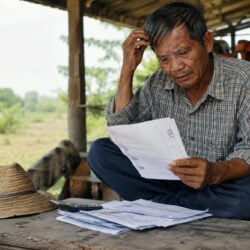
More than half of Thai farmers with debts will likely never be able to pay them off in full, according to PIER, the research institute of the Bank of Thailand. Older farmers, in particular, are trapped in loans, interest payments, and repayment schedules that are poorly aligned with their income.

Fitch Ratings expects the outlook for Thai banks to deteriorate in 2026. The major banks started the year with solid earnings figures, but lower interest margins, weaker economic growth, and pressure on borrowers could affect profits and credit quality in the coming months.

The Bank of Thailand sees no risk of Thailand entering stagflation. Governor Vitai Ratanakorn says that inflation will not remain high for an extended period and that the labor market is stable. However, the central bank anticipates higher prices in 2026 due to more expensive energy and costs that companies partially pass on.
TikTok is rewriting the Thai economy: this is how the streetscape is changing for tourists.
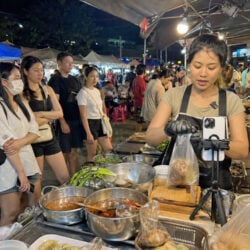
Anyone who has vacationed in Thailand in recent years sees it everywhere. A line of twenty people in front of an inconspicuous stall. A night market that was empty six months ago and is now overflowing. A Thai woman talking loudly on her phone in a tuk-tuk to two thousand invisible viewers. Behind all these scenes is one app: TikTok. And its influence extends far beyond dance moves.
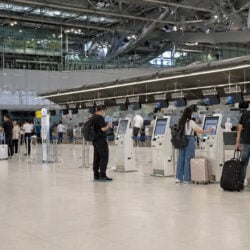
Thai travelers flying abroad may face a departure levy of 1.000 baht. Minister Surasak Phancharoenworakul wants to use the revenue to stimulate domestic tourism in Thailand. According to him, the measure can be reintroduced because the existing law from 1983 is still in force.

The Senate Committee on Economic, Monetary and Fiscal Affairs wants to radically reform the Thai tax system. The proposal includes, among other things, an increase in VAT from 7 to 10 percent. According to the committee, this is necessary because the national debt could come dangerously close to the legal limit between 2027 and 2029.
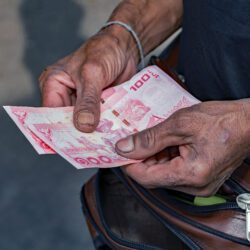
Thailand fears a period of low growth and rising prices as the war in the Middle East makes energy, transport, and raw materials more expensive. Economists, businesses, and investors see the risk of stagflation increasing, although they differ on its severity. Households, small business owners, industry, and tourism, in particular, are feeling the pressure.
Thailand intends to borrow up to 500 billion baht via an emergency decree to weather economic headwinds. The government in Bangkok says that its cash position is under pressure and that external risks, such as international tensions and environmental problems, are further reducing financial headroom. As a result, the existing debt ceiling must also be raised.
High household debt puts Thai banks under further pressure

Thai households are increasingly struggling to repay loans as debt, the cost of living, and external shocks mount simultaneously. According to a Bloomberg Intelligence analyst, that pressure is now affecting the banking sector as well, despite strong buffers at the largest Thai banks.
Thailand wants to conclude negotiations on a free trade agreement with the European Union this year. This has become increasingly urgent now that the EU and India have concluded their own trade deal. Otherwise, Thai exporters of textiles, fish, jewelry, and other price-sensitive products, in particular, risk losing ground on the European market.
Government opts for green loans as economic space shrinks
Thailand is seeking emergency measures as higher oil prices, weaker growth, and rising inflation risks put pressure on the economy. Finance Minister Ekniti Nitithanprapas wants soft loans for solar panels and electric cars, additional support for vulnerable groups, and a tighter budget to limit the damage.
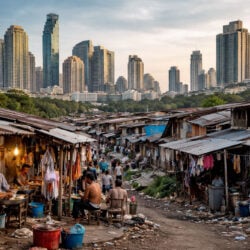
New figures show that income disparities in Thailand remain stubbornly large. While Bangkok and a small upper class benefit from growth, many households elsewhere live with low wages, insecure work, and little chance of advancement. The gap is not only based on income, but also on wealth, education, and place of birth.

The Thai economy is dominated by state-owned companies, often with a monopoly on their activities. Other companies often also have a monopoly or oligopoly position. This may be beneficial for a newly developing economy, but not for a country at the stage of development such as Thailand. The poor performance of the economy is not only the result of foreign factors.
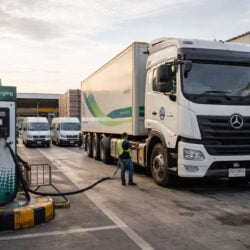
Rising oil prices are giving the Thai electric vehicle market an extra boost. Trade association EVAT expects more than 120.000 battery-powered cars sold this year. Electric passenger cars and commercial vehicles such as trucks, vans, and pickups are expected to drive the growth in particular, while Chinese brands further strengthen their position in Thailand.