Thailand is often seen as a country of Buddhist temples, rustling palm trees and serene monks. But behind this postcard is another story that rarely comes to the fore: that of Thailand’s Muslims. Spread across the country but with deep roots in the south, this community is an indispensable layer in Thai history and society. From the smell of halal stalls in Bangkok to centuries-old mosques in Pattani, the Islamic presence is both tangible and complex. This article takes you beyond the clichés and highlights the history, diversity and challenges of a minority that has quietly helped shape Thailand.
A minority of millions
With over 3,6 million people, or about 5,4% of Thailand’s total population according to the 2018 census, Muslims are a significant minority. But behind this number lies a world of cultural richness, religious diversity and historical ties to the wider Southeast Asian region. While the majority of Thailand’s population is Buddhist, the country’s south is a different place. Here, in the provinces of Pattani, Yala, Narathiwat and Satun, Muslims are the majority – up to 90% of the population in some areas.

Heirs of an ancient history
The Islamic presence in Thailand is not a recent development. As early as the 9th century, Arab and Persian merchants set foot in the kingdom of Srivijaya, in what is now southern Thailand. From that time on, Islam grew slowly but steadily, driven by trade and diplomacy. During the Ayutthaya Kingdom (1351-1767), Muslims, especially Persians and Malays, found their way into the courts of Siam. Persian families such as the Bunnag clan even played key roles in the political and economic power structures of the kingdom.
The southern Muslim community has a different origin. For centuries, this region was part of the independent Sultanate of Pattani, an Islamic kingdom that was only annexed by Siam in the 19th century. The memory of that annexation lives on in the cultural memory of local Malay Muslims, who still cherish the Malay language and Islamic customs.
This historical stratification is also reflected in the ethnic composition of Thai Muslims, which includes much more than just their Malay roots from the south.
More than just Malays
The term “Thai Muslims” is actually too simplistic. Although about two-thirds of Thai Muslims are of Malay descent, the community is remarkably diverse. You’ll also find Thai converts, descendants of Chinese Hui immigrants, Cambodian Cham Muslims, Bengalis, Pakistanis and Indonesians. Bangkok, for example, is home to sizeable communities of Bengali and Pakistani Muslims who migrated to Thailand generations ago as traders or craftsmen.
This mosaic of identities gives rise to diverse Islamic practices. While Malays in the south combine traditional Malay customs with Islamic rituals, Muslims in Bangkok and Chiang Mai often take a more cosmopolitan approach to their faith.
Religion between freedom and conflict
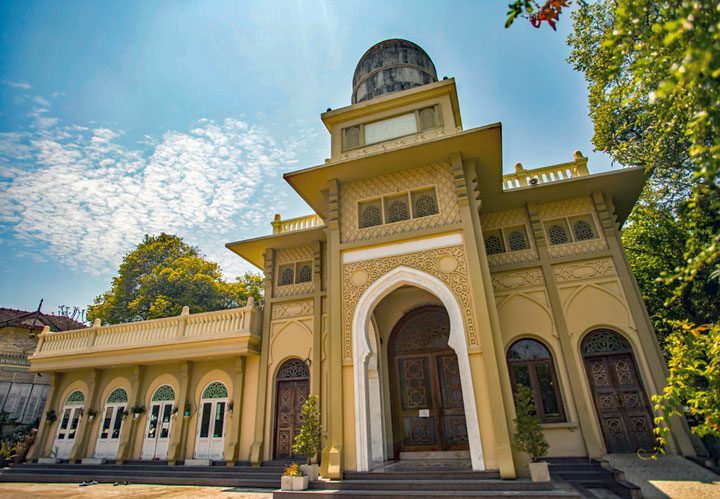
The Thai constitution recognizes Islam as one of the five official religions. This ensures that Muslims can practice their faith freely, build mosques and establish their own schools. Today, Thailand has hundreds of mosques, from the grand Darul Aman Mosque in Pattani to small neighborhood prayer houses in Bangkok. In the early morning, the alleys of the Bang Rak district are filled with the soft chanting of the call to prayer, while the smell of freshly baked roti and spicy curry mingles with the aroma of jasmine tea.
However, integration has not been smooth everywhere. In the southern provinces, ethnic and religious tensions have been present for decades. Separatist movements are striving for more autonomy or even independence from Bangkok. These conflicts are not merely religious, but are deeply rooted in historical, cultural and socio-economic grievances.
At the same time, in cities like Hat Yai and Songkhla, more and more cooperation projects between Buddhist and Muslim communities are emerging, for example in the areas of education and local trade. Despite the tensions, the vast majority of Thai Muslims continue to strive for peaceful coexistence and a place within Thai society.
Economy, education and halal industry
Thai Muslims make a significant contribution to the country’s economy. In the south, many are active in fishing, rubber and trade. In Bangkok, Islamic markets and halal restaurants flourish, where Thai dishes are prepared according to Islamic dietary laws. The Khlong Toei halal market, for example, is well-known, where customers can find everything from halal chicken to fresh spices.
The halal industry has grown to the point where Thailand is a major exporter of halal products, especially halal chicken, to neighboring countries such as Malaysia and Indonesia. Exports to Malaysia alone are worth hundreds of millions of dollars per year.
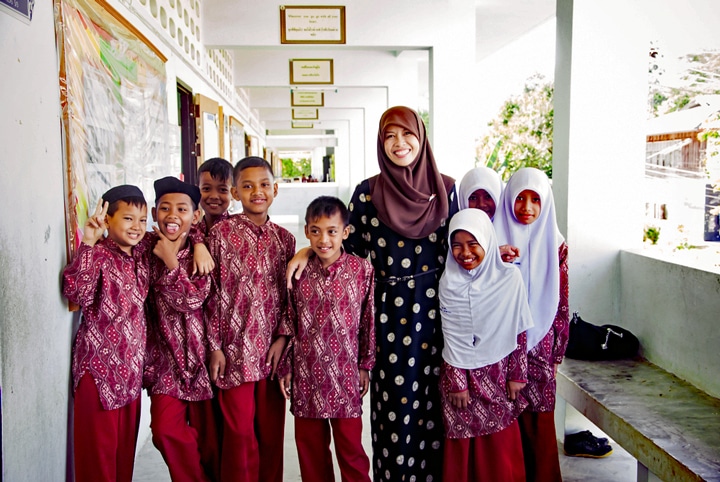
Education plays a central role in the community. Islamic schools – pondoks and madrasahs – offer regular primary education in addition to religious education. This network of schools strengthens the religious identity of the community, but is in line with national educational requirements.
A hidden face of Thailand
Thailand’s Muslims are a minority often out of sight of tourists and even many Thais. Yet they are an essential part of the country’s multicultural and multiethnic reality. Theirs is a story of centuries of interplay between faith, trade and power, from deep roots in the Malay south to bustling markets in the heart of Bangkok.
Thailand is more than Buddhist serenity; it is also the story of a community that quietly but resiliently continues to claim its place. To truly understand what makes this country tick, you must listen to the whispers of those other, less heard voices.